Fitted wardrobes are practical, but the details you see every day are what make them feel like part of a considered bedroom design. Doors, handles, proportions and finishes all affect whether your wardrobes look calm, elegant and easy to live with.
The right choices can make built in wardrobes feel like a natural part of the room rather than a large storage feature. This guide explains how to choose door styles and handles for fitted bedroom wardrobes, with simple advice for creating a tidy bespoke look that suits your home.
Start with the style of the room
Before choosing a door design, look at the room as a whole. Wardrobe doors take up a large visual area, so they need to sit comfortably with the bed, flooring, wall colour, lighting and any existing furniture. A style that looks beautiful in isolation can feel too busy or too plain if it does not suit the rest of the space.
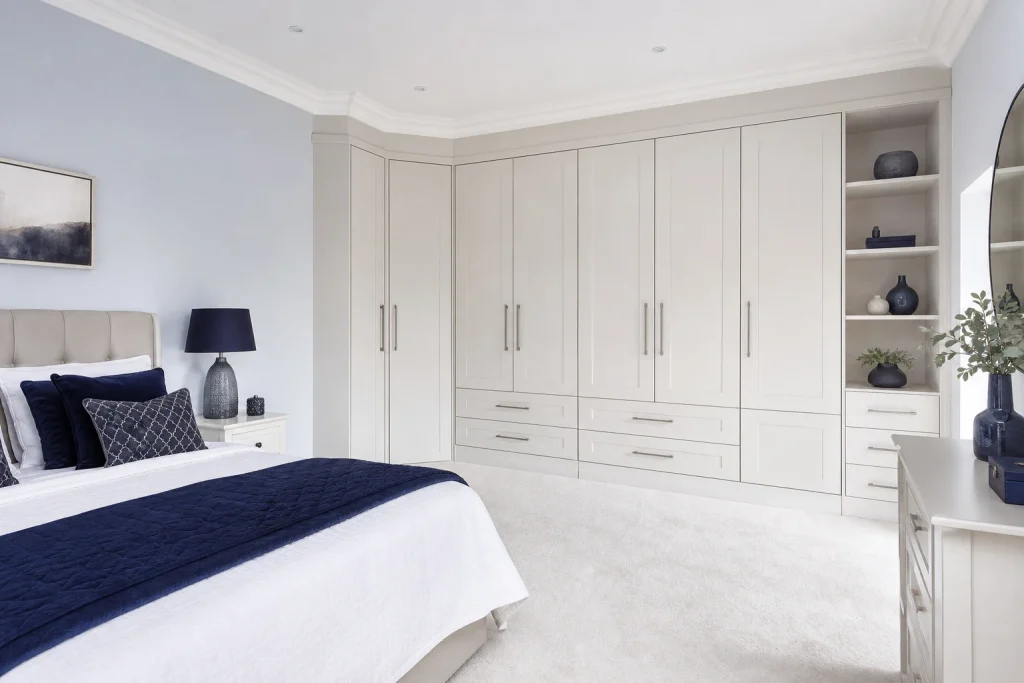
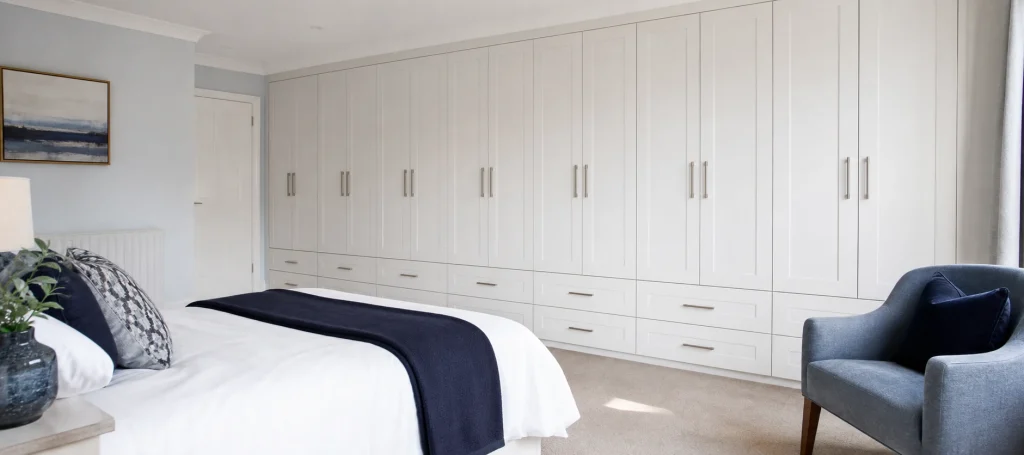
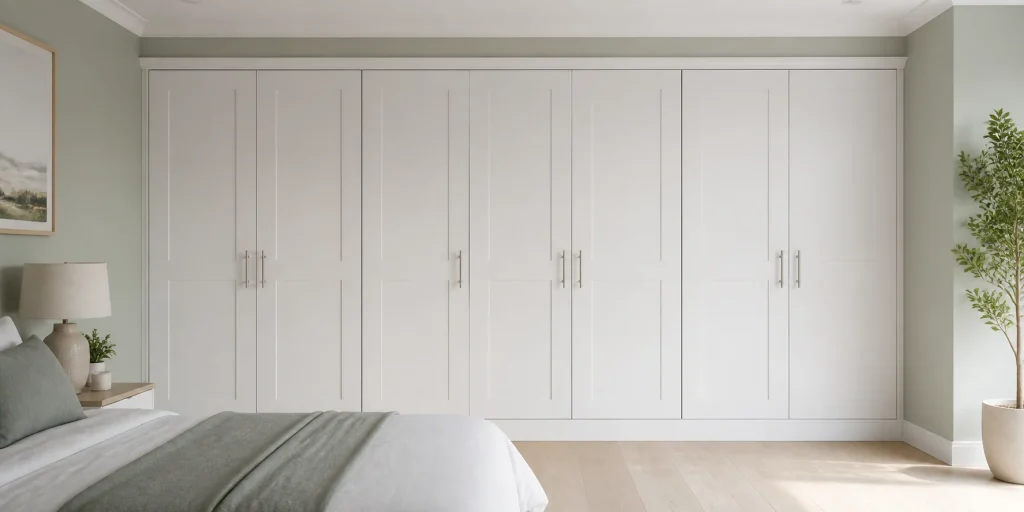
For many bedrooms, shaker style doors are a dependable choice because they add shape without shouting for attention. The framed detail gives the wardrobe some character, while the flat centre panel keeps the look neat and balanced. This makes shaker doors especially useful when you want fitted wardrobes to feel refined rather than decorative for the sake of it.
Plain slab doors can work well in very simple interiors, especially where the aim is to reduce visual detail. They create a smooth surface and can make the room feel more streamlined. The trade off is that they rely heavily on proportion, finish and handle choice, because there is less detail in the door itself.
If your bedroom already has panelled doors, traditional furniture or softer furnishings, shaker doors can help the wardrobes feel connected to the room. If the room is more minimal, a slimmer frame or simpler door profile may be enough. The aim is not to copy every detail in the room, but to choose doors that feel like they belong there.
Think about door proportions, not just door style
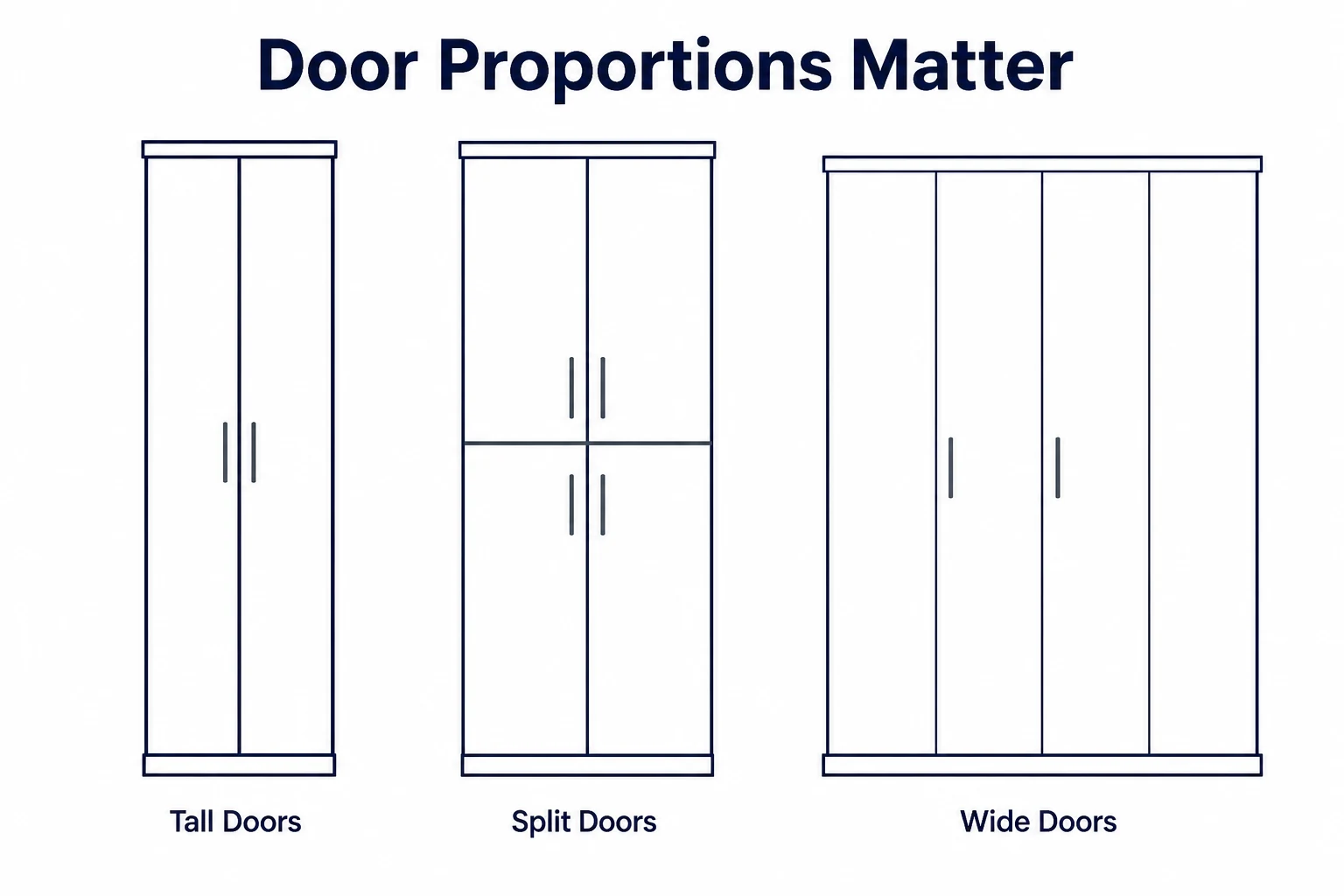
Door style matters, but proportions are just as important. Tall doors can make the wardrobe feel elegant and calm, while too many narrow doors can make the design look busy. Wider doors may feel cleaner, although the best option depends on the space available and how the internal storage is arranged.
When planning bespoke wardrobes, the outside and inside should be considered together. A beautiful run of doors is only successful if the storage behind them works properly. Hanging space, shelves, drawers and shoe storage all influence where door breaks should sit. Good design brings the practical layout and the visible design into one plan.
For awkward corners, alcoves or sloping areas, fitted wardrobes can make better use of space than freestanding furniture. The door layout should still feel balanced, even when the wall is not simple. If you are planning around an awkward part of a bedroom, Khristians has a useful guide on turning awkward bedroom corners into fitted wardrobe storage.
It is also worth thinking about how the doors will look when closed. Most of the time, wardrobes are viewed as a complete wall of cabinetry, not as individual doors. Even spacing, consistent panel sizes and clean lines help the whole design feel calmer.
Choose a finish that keeps the room feeling light
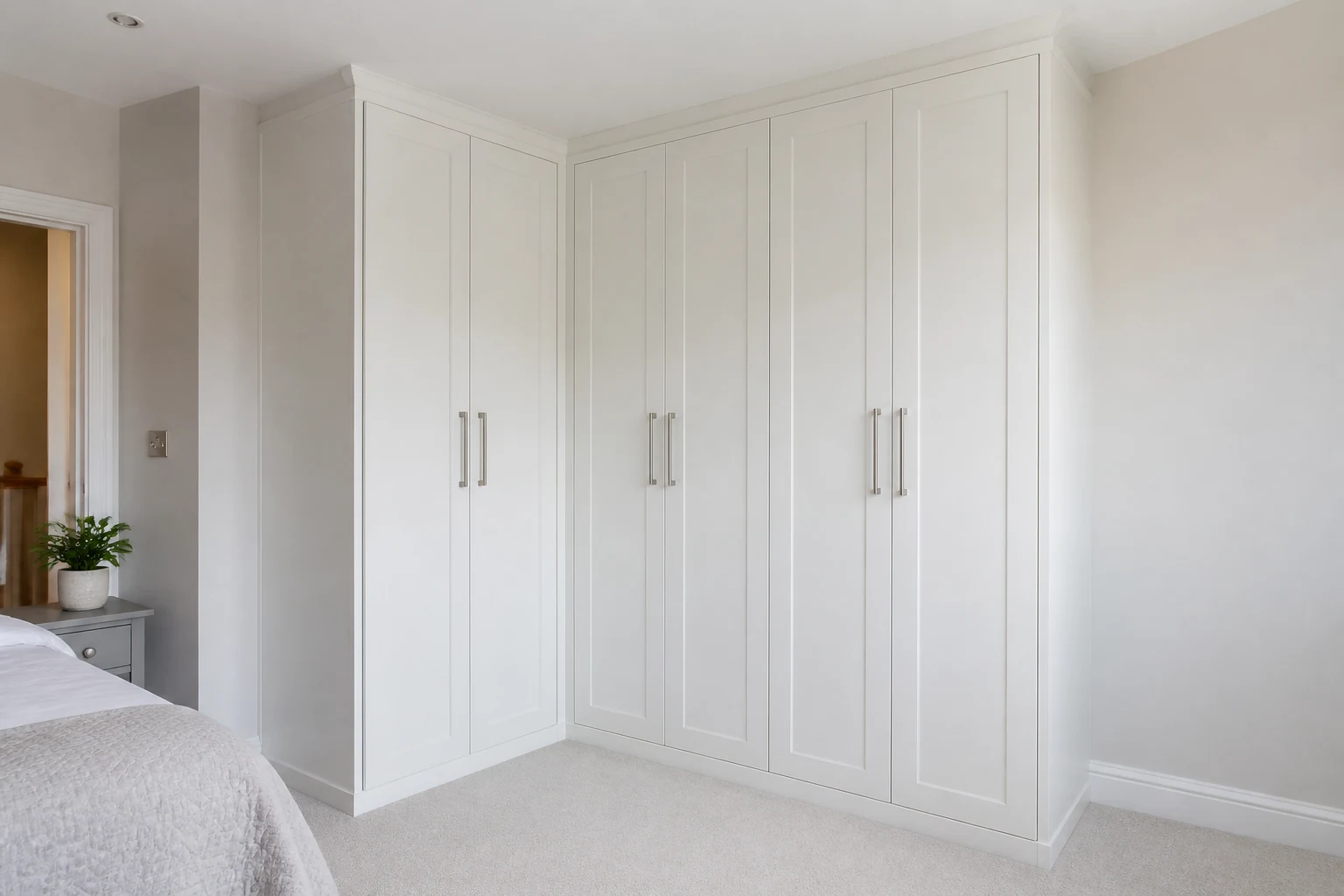
Colour has a major impact on how fitted bedroom wardrobes feel. Crisp white cabinetry remains popular because it reflects light, works with many wall colours and keeps the room looking fresh. It also gives door details, such as shaker framing, a clean and understated finish.
White does not have to mean cold or plain. Different whites can feel softer, brighter or warmer depending on the room. The best choice is usually the one that sits well with the walls, flooring and natural light. Soft pastel walls can pair beautifully with white wardrobes because the cabinetry stays quiet while the room still has personality.
Neutral finishes are also helpful if you like to change bedding, curtains or decor over time. A wardrobe is a lasting fitted feature, so it should not rely too heavily on a colour trend. Choosing a calm finish gives you more freedom to refresh the room without the wardrobes feeling out of step.
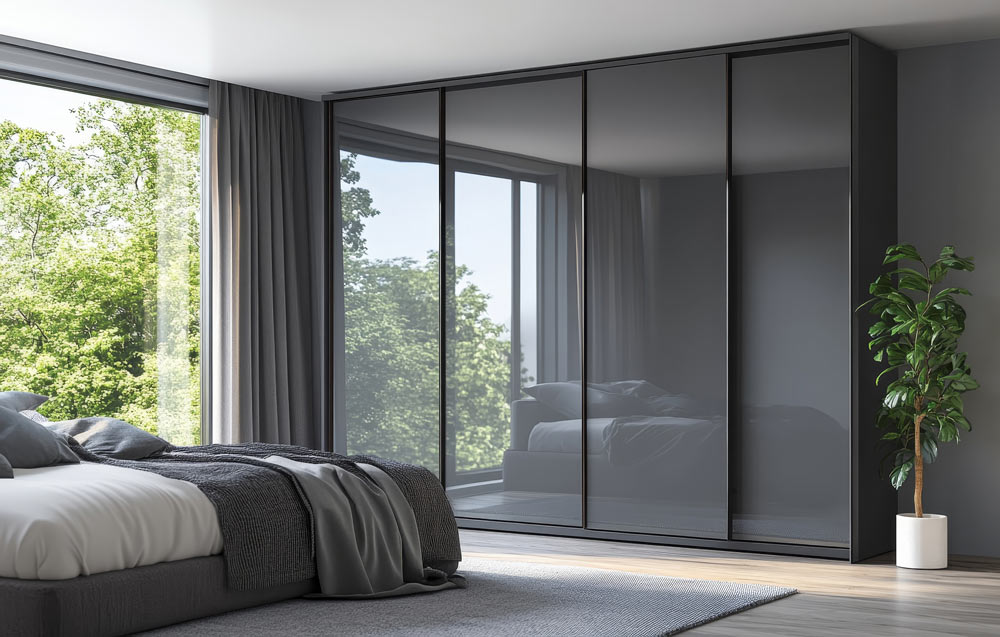
Gloss, satin and matt finishes each create a different effect. Gloss can reflect more light, but it can also show marks more easily. Matt and satin finishes tend to feel softer and more relaxed. For shaker style doors, a smooth painted look often suits the design because it lets the panel detail do the work without adding too much shine.
Match handles to the level of detail you want
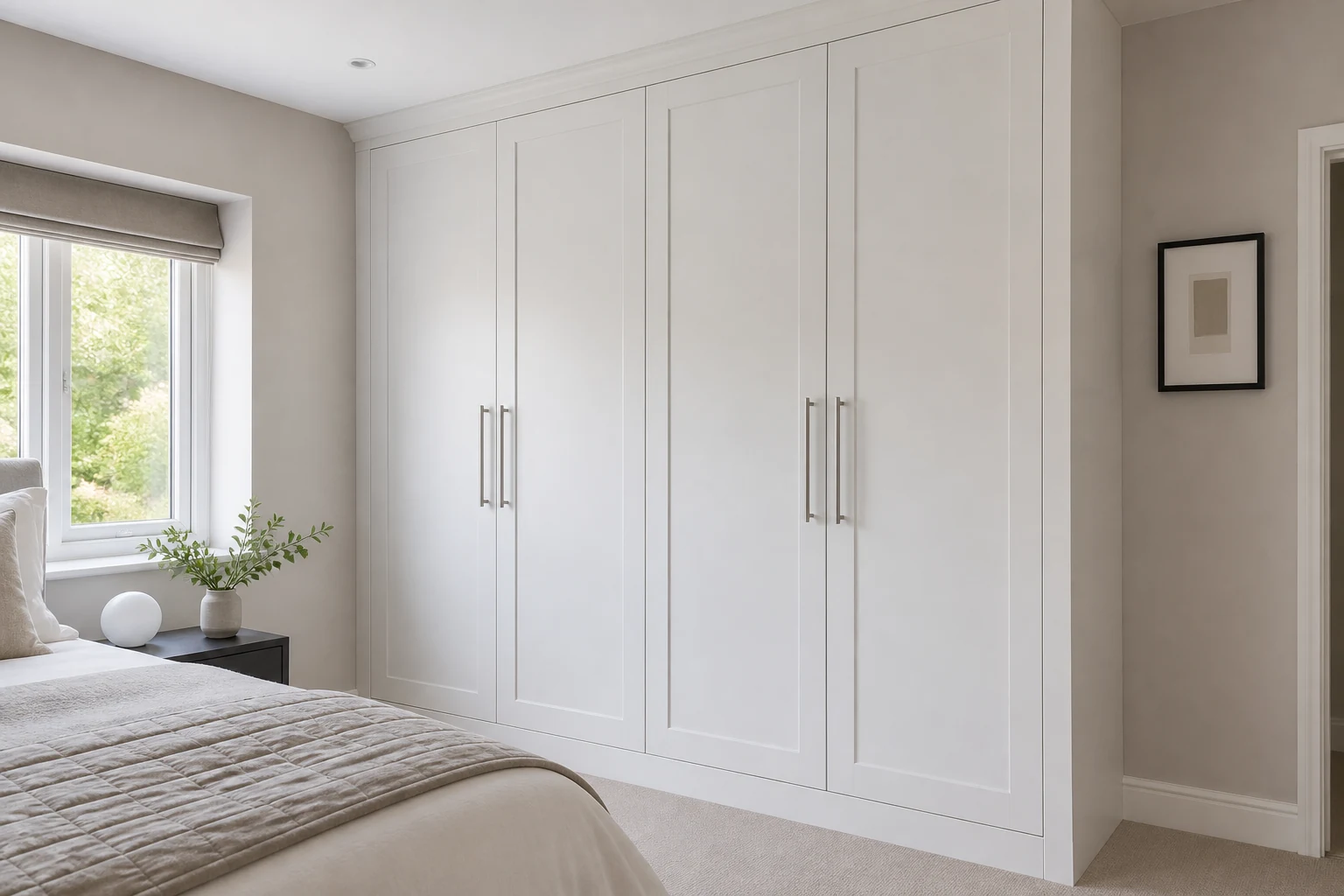
Handles may seem like a small decision, but they can change the whole feel of fitted wardrobes. Slim metallic handles are a strong choice when you want the cabinetry to feel tidy and contemporary without losing warmth. They add a precise finishing touch, especially against crisp white doors.
Long handles can emphasise height and make tall wardrobe doors feel more elegant. Small knobs can suit traditional rooms, although they create a different rhythm across the doors. Cup handles are often associated with drawers and can add charm, but they may feel too detailed if used across a large wall of wardrobe doors.
Think about comfort as well as appearance. Handles should feel easy to grip and should suit the way you use the wardrobe every day. A handle that looks delicate but feels awkward will quickly become frustrating. The best hardware looks right, feels good in the hand and suits the scale of the door.
Metal finish matters too. Brushed chrome, nickel and similar finishes can look clean and subtle. Darker handles create more contrast and can make the doors feel more defined. If you want a softer look, choose a finish that does not compete with other details in the room, such as lighting, sockets or furniture handles.
Decide between hinged and sliding doors
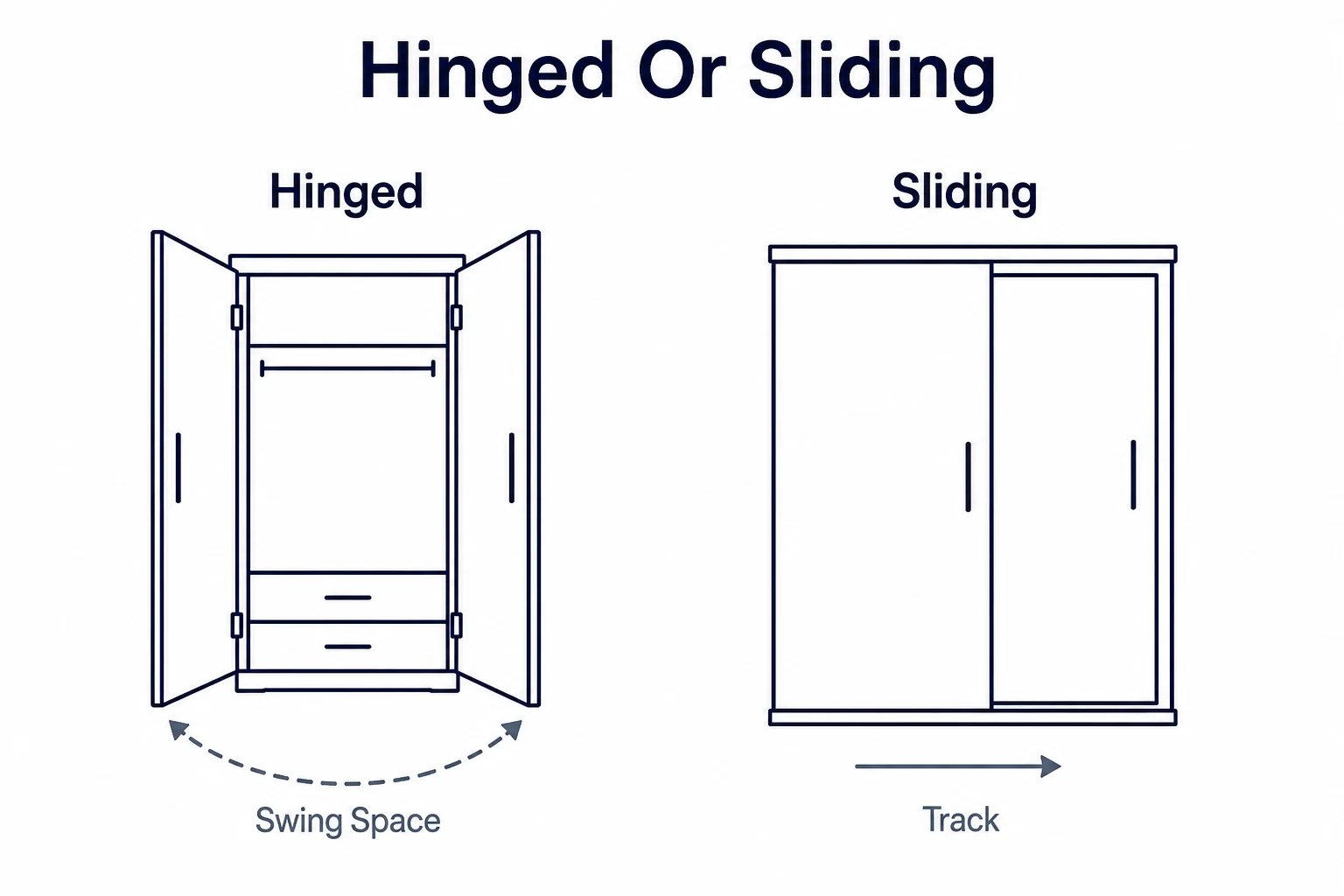
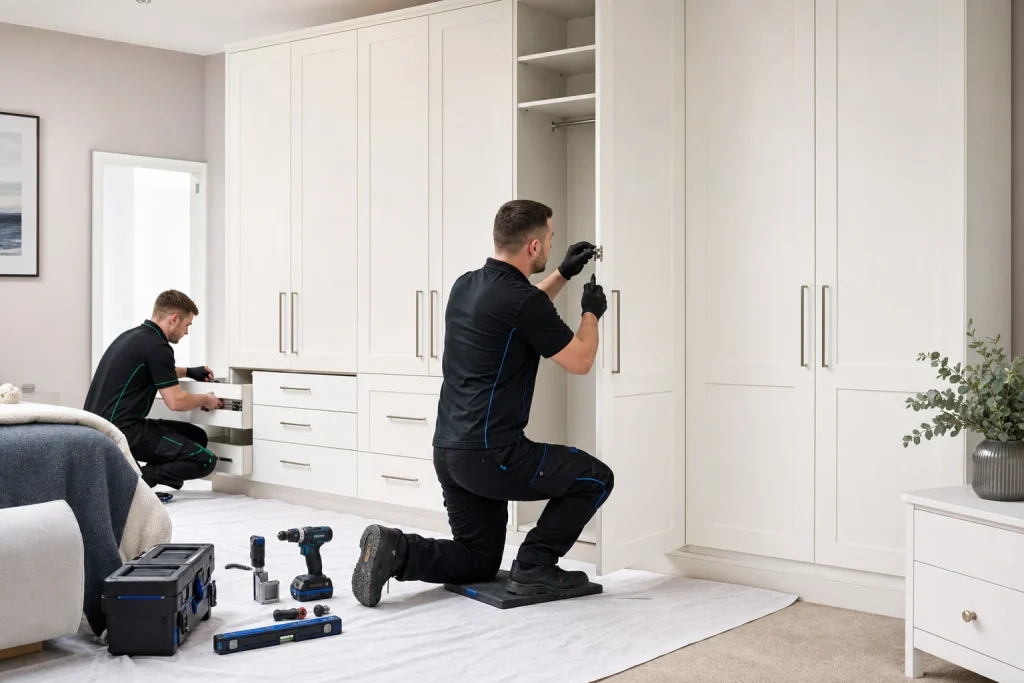
Door opening style affects both the look and the function of fitted wardrobes. Hinged doors are often the best fit for shaker style designs because the framed panels can be shown clearly. They also allow wide access to the storage inside, which is useful when planning hanging space, drawers and shelves.
Sliding doors can be useful where floor space is limited, since they do not open out into the room. They usually create a different visual effect, with larger panels and fewer vertical breaks. This can work well in some spaces, but it may not be the right answer if you want a classic shaker style wardrobe.
The choice should be based on how the room works, not only on preference. Consider the space between the wardrobe and the bed, where drawers need to open, and how often different sections will be used. For a deeper comparison, see Khristians’ guide to sliding and hinged wardrobes.
If you are drawn to shaker doors, hinged wardrobes will often give the most natural result. If you want larger uninterrupted panels, sliding doors may be worth considering. Either way, the visible door design should support the way the room functions.
Use the details to create a bespoke finish
The difference between standard storage and bespoke wardrobes is often found in the details. Door sizes, frame widths, handle positions, internal layout and surrounding trims all contribute to the final result. When these choices are planned together, the wardrobes feel built for the room rather than simply placed in it.
Low built in storage, full height doors, drawer sections and open shelving can all be considered as part of a wider bedroom design. The key is to avoid adding details just because they are available. Each feature should earn its place by improving storage, balance or daily use.
If you like the idea of white cabinetry, shaker style doors and slim metallic handles, the Cottage Project fitted wardrobe design is a natural service page to explore. It shows how visible choices can support a tidy, bespoke finish without making the room feel overdesigned.
For smaller rooms, the same principles become even more important. Calm doors, considered handles and efficient storage can help reduce visual clutter. Khristians also explains how fitted wardrobes can make small bedrooms feel less cluttered, which is useful if you are planning a room where every decision needs to work hard.
- Shaker style doors are a versatile choice when you want fitted wardrobes to feel classic, tidy and considered.
- Crisp white cabinetry helps built in wardrobes feel bright and easy to coordinate with changing decor.
- Slim metallic handles add a clean finishing touch without overpowering the door design.
- Door proportions, handle placement and internal storage should be planned together.
- The best fitted wardrobe design looks calm when closed and works smoothly when used every day.
Frequently asked questions
Are shaker style doors a good choice for fitted wardrobes?
Yes. Shaker style doors are popular because they add structure and detail while still looking neat. They suit many bedroom styles and work especially well with white cabinetry and simple metallic handles.
What handles look best on fitted bedroom wardrobes?
Slim metallic handles are a strong option for a clean and balanced look. Longer handles can emphasise height, while smaller knobs can feel more traditional. The right choice depends on the door style and the overall room design.
Do white fitted wardrobes make a bedroom look bigger?
White fitted wardrobes can help a bedroom feel lighter and calmer, especially when paired with soft wall colours and a simple door layout. The effect also depends on storage planning, lighting and how much visual clutter is reduced.
Should wardrobe doors match other furniture in the room?
They do not need to match exactly. It is usually better for the wardrobes to coordinate with the room through colour, proportion and hardware finish. This creates a more natural and less forced design.
Plan the details with confidence
If you are choosing fitted wardrobes and want the doors, handles and storage to feel considered from the start, Khristians can help shape a design that suits the room and the way you use it.