A small bedroom can start to feel cluttered long before it is actually full. A chair becomes a clothes pile, spare bedding has nowhere obvious to live, shoes drift under the bed and everyday items end up on every available surface.
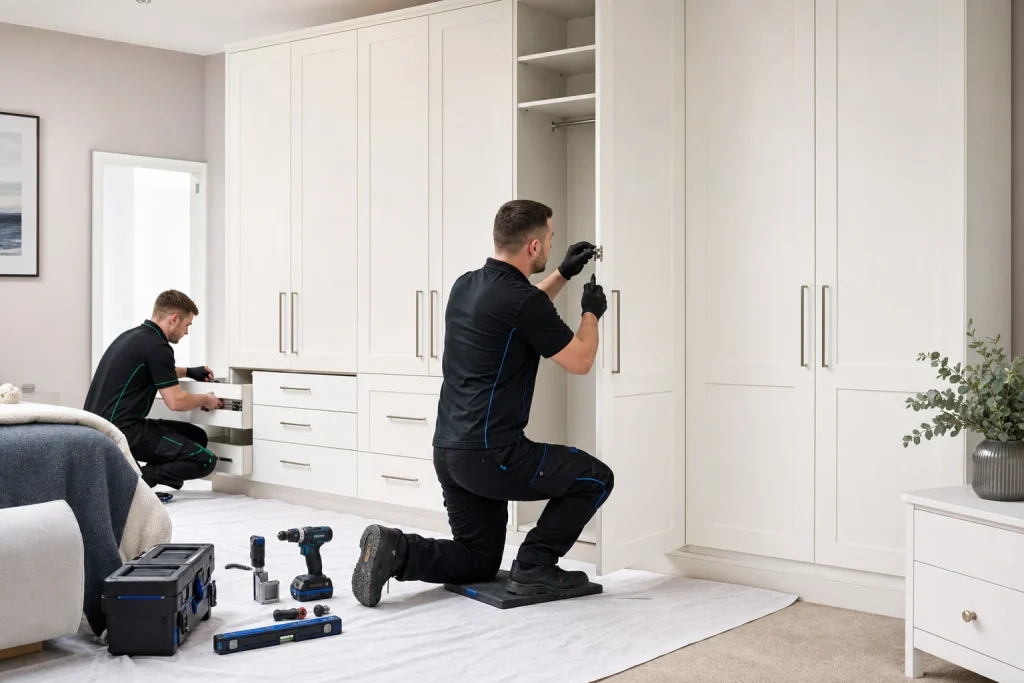
Fitted wardrobes help because they do more than add storage. They give the room a clear structure, use awkward space properly and make it easier to keep belongings out of sight without losing access to the things you use every day.
Why small bedrooms feel cluttered so quickly
Compact bedrooms often have enough belongings in them, but not enough suitable places for those belongings to go. A freestanding wardrobe may offer hanging space, yet leave gaps above, beside and behind it. A chest of drawers might help with folded clothes, but it can also take up valuable floor space and create another surface where clutter gathers.
The problem is rarely one single item. It is usually the combined effect of visible storage, mismatched furniture, narrow walkways and loose items that never quite have a home. Even when the room is clean, it can still feel busy because the eye keeps stopping at gaps, handles, boxes, rails, baskets and furniture edges.
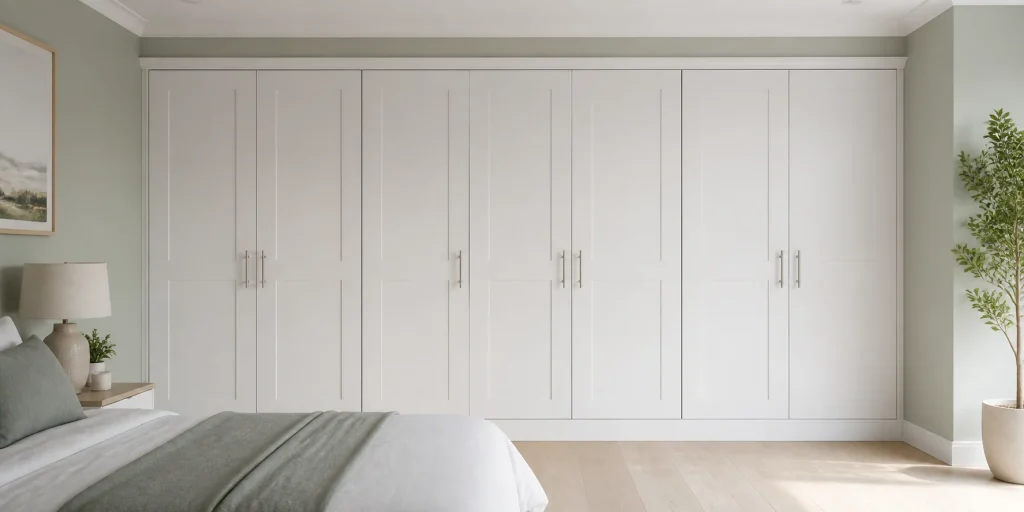
Fitted bedroom furniture tackles this by reducing visual breaks. Instead of several separate pieces fighting for space, the storage can be planned as one calm run of cabinetry. That makes the room easier to read, which is a big part of why it feels less cluttered.
Built in wardrobes use the whole wall more intelligently
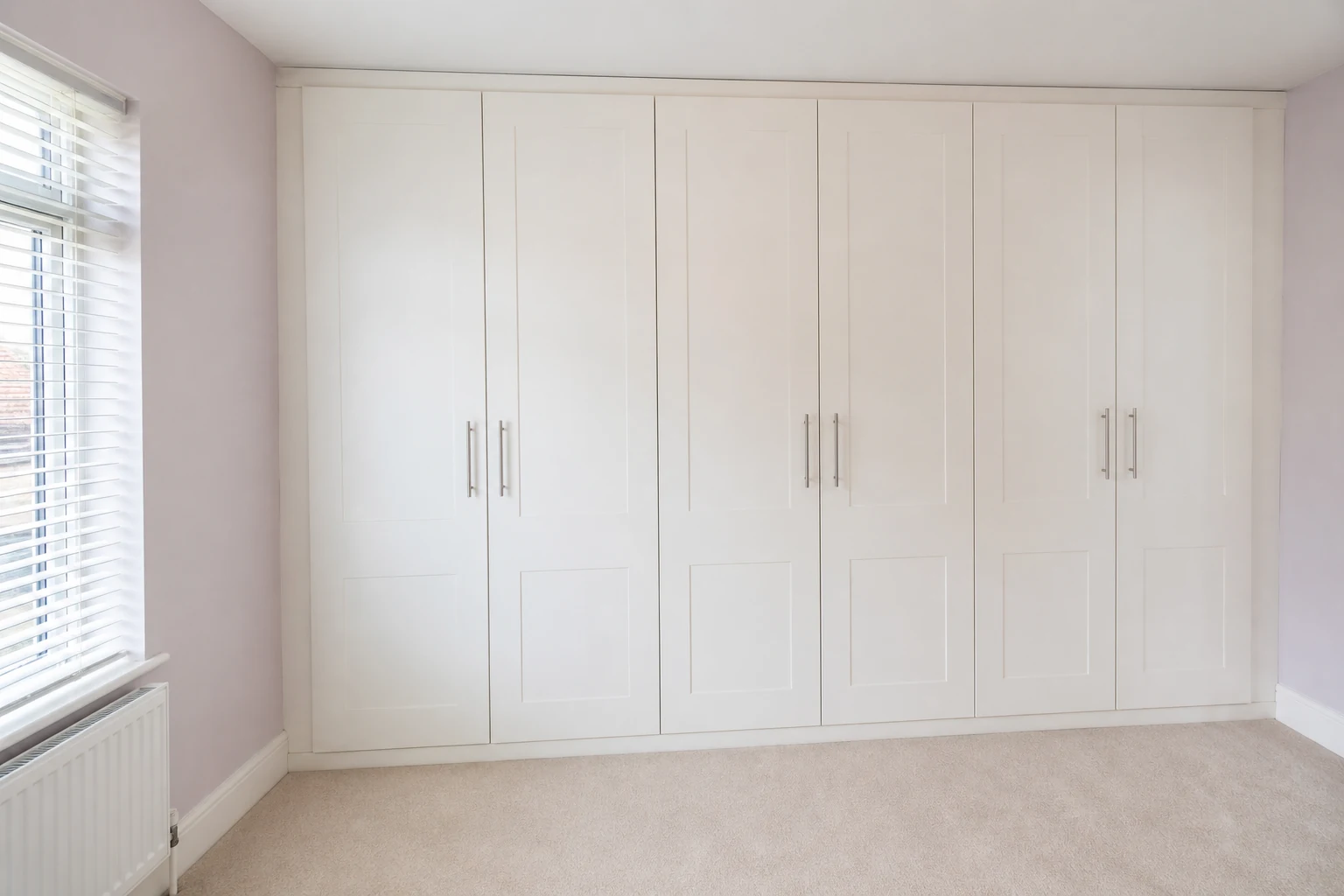
One of the main advantages of built in wardrobes is that they can be designed around the actual shape of the room. In a small bedroom, this matters. The space above a standard wardrobe is often wasted, yet it can be ideal for items you use less often, such as spare bedding, seasonal clothing, luggage or keepsake boxes.
Going higher with storage can also reduce the need for extra furniture elsewhere in the room. If more can be stored neatly within one fitted run, you may not need as many drawers, storage boxes or open rails. That leaves more visible floor area, which helps the bedroom feel calmer and easier to move around.
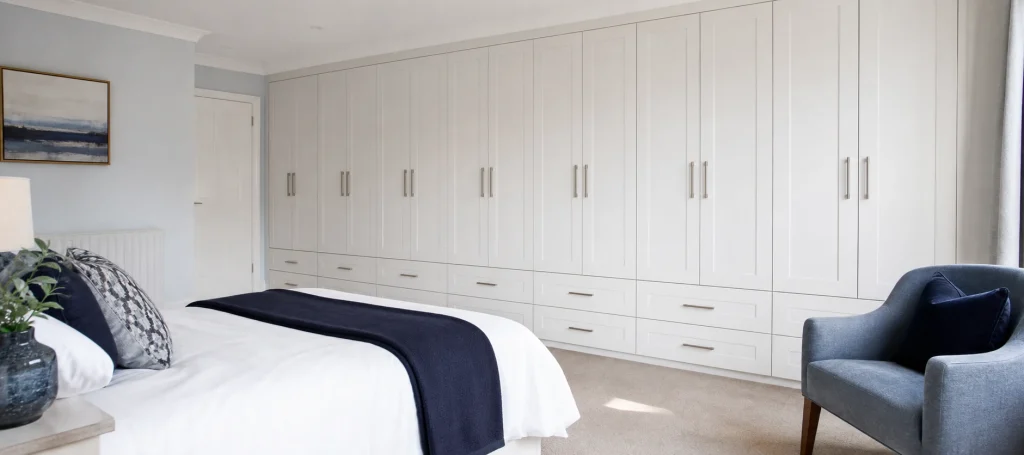
For some rooms, floor to ceiling wardrobes are especially useful because they make better use of vertical space while keeping the overall look simple. The key is not just height, but proportion. Doors, internal sections and handles should feel balanced so the wardrobes support the room rather than overpower it.
A made to measure layout gives everything a proper place
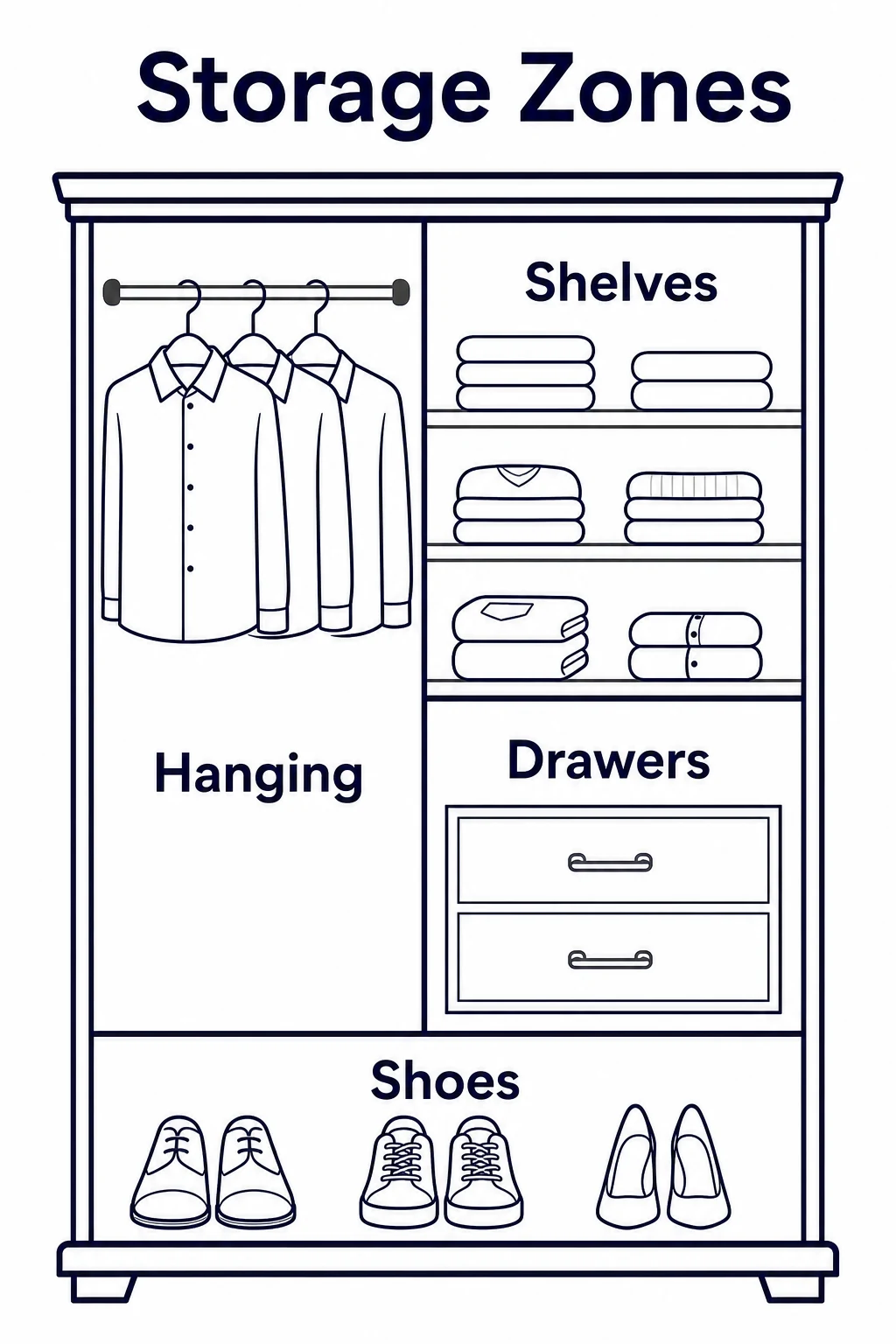
Clutter often appears when storage does not match real habits. If you own more folded clothes than hanging clothes, a wardrobe with too much rail space will not help. If shoes, bags, workwear or accessories are used daily, they need places that are easy to reach, not just somewhere to be hidden.
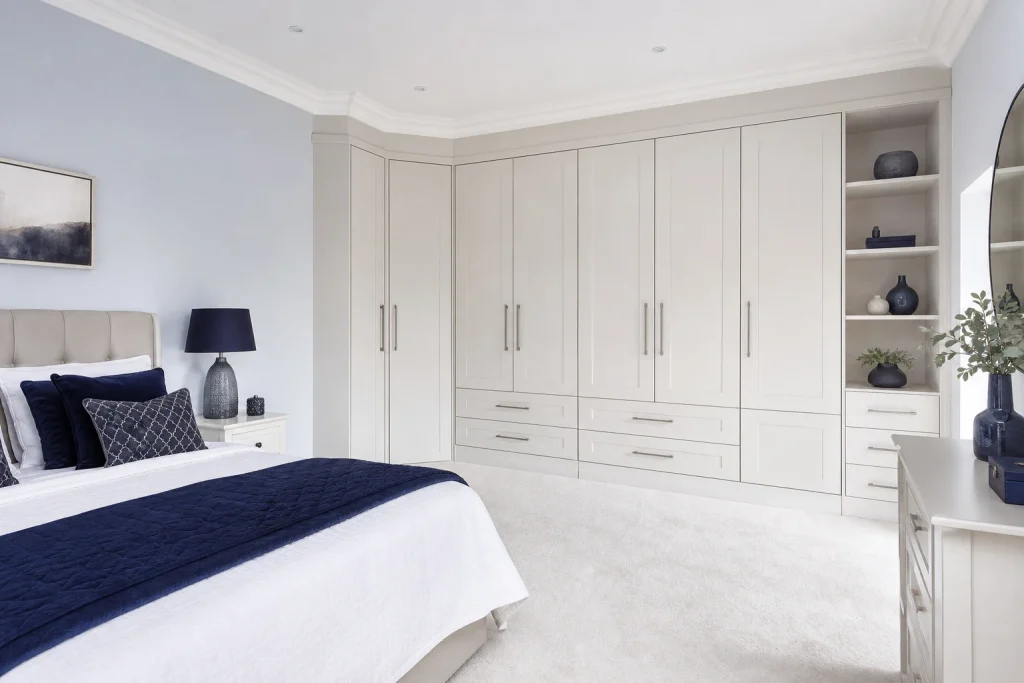
A fitted wardrobe can be planned around how you actually use the bedroom. That might mean double hanging for shirts and trousers, deeper drawers for knitwear, slim drawers for smaller items, shelves for bags, dedicated shoe storage, internal lighting or a higher section for less frequent items.
The best layouts are not necessarily the most complicated. In a small bedroom, the goal is clarity. Every category should have a natural home, and the most used items should be the easiest to access. When the inside of the wardrobe works properly, the outside of the room stays tidier with much less effort.
This is where luxury fitted bedroom furniture can be genuinely practical rather than purely decorative. A well planned bedroom does not just look polished when it is first finished. It supports daily routines, which is what keeps the space feeling ordered over time.
Less furniture can make the room feel bigger
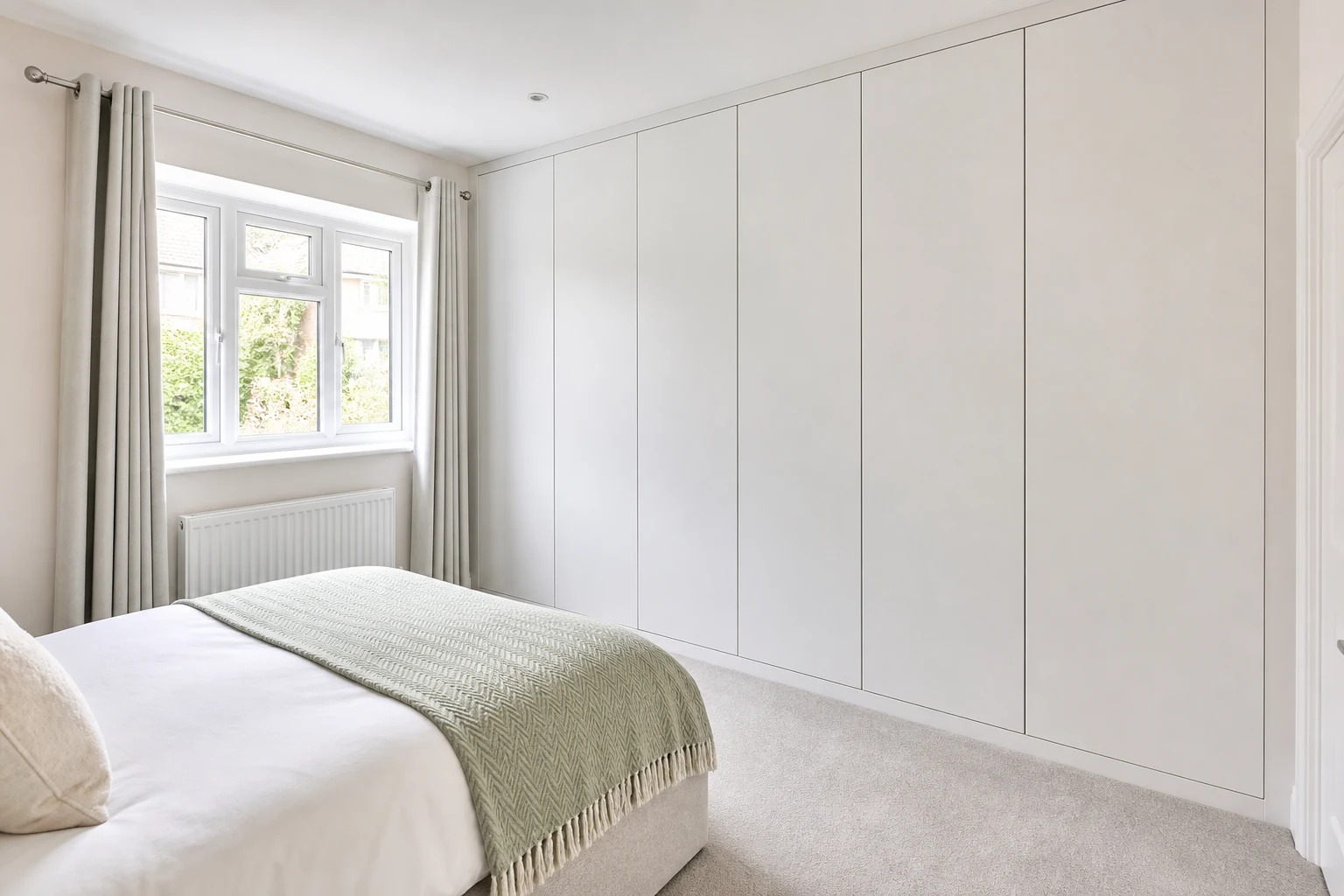
Small bedrooms often become crowded because each storage problem is solved separately. A wardrobe is added for hanging clothes, then a chest of drawers for folded items, then bedside storage, then boxes for overflow. Each piece may be useful on its own, but together they can make the room feel full.
Fitted wardrobes can combine several storage needs in one place. Drawers can sit inside the wardrobe, shelves can be hidden behind doors and taller cupboards can hold items that would otherwise live in separate boxes. This can reduce the number of standalone pieces needed in the room.
Fewer furniture pieces usually means cleaner lines and easier movement. It can also make the bed feel more settled within the room, because the storage is no longer competing with it from every side. In a compact bedroom, that sense of order can be just as valuable as the storage capacity itself.
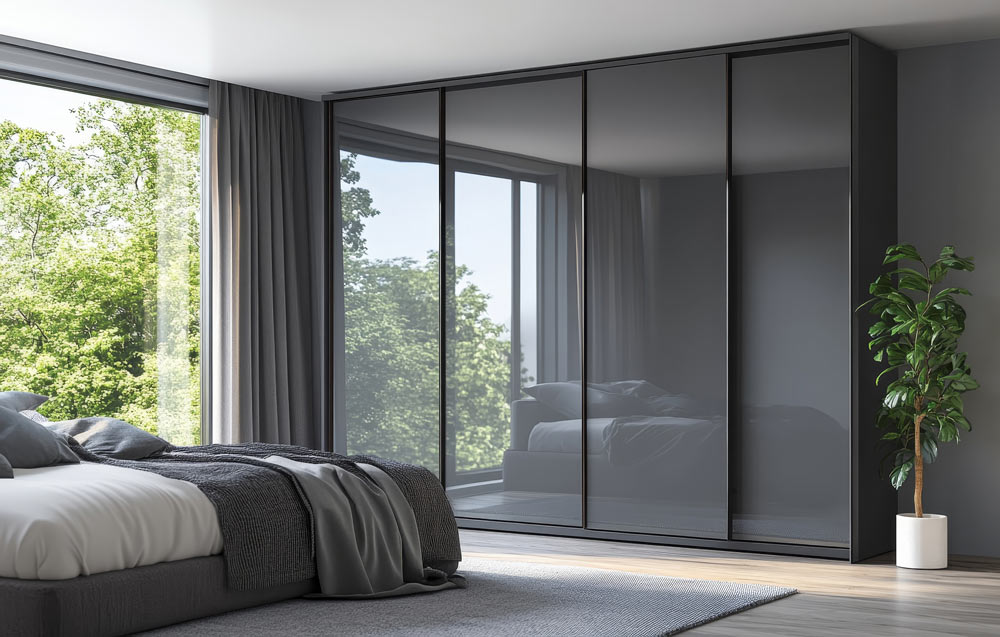
Door choice also matters. Hinged doors can offer full access and a classic feel, while sliding doors can work well where there is limited clearance in front of the wardrobe. If door style is part of the decision, Khristians has a helpful guide to sliding and hinged wardrobes that explains how each option affects everyday use.
Closed storage creates a calmer visual backdrop
Open shelving can look attractive when carefully styled, but it is not always forgiving in a small bedroom. Clothes, boxes, toiletries, books and accessories all add colour, texture and shape. When too much is visible, the room can feel busy even if every item is neatly arranged.
Closed fitted wardrobes give the bedroom a quieter backdrop. Doors conceal the practical parts of storage, so the room feels less like a place where everything is on display. This is especially useful in bedrooms that also need to function as dressing areas, workspaces or shared spaces.
The external design of the wardrobe should support this sense of calm. Simple door patterns, considered handle choices and balanced proportions can help the cabinetry feel integrated. The aim is not to make the room plain. It is to remove unnecessary visual noise so the parts you do want to notice, such as the bed, lighting, soft furnishings or artwork, have room to breathe.
There is also a psychological benefit. When storage is closed and well organised, the bedroom can feel more restful. You are not constantly looking at unfinished tasks, piles of clothes or items waiting to be sorted. That can make a small room feel more comfortable, not just more spacious.
Planning details that make fitted wardrobes work harder
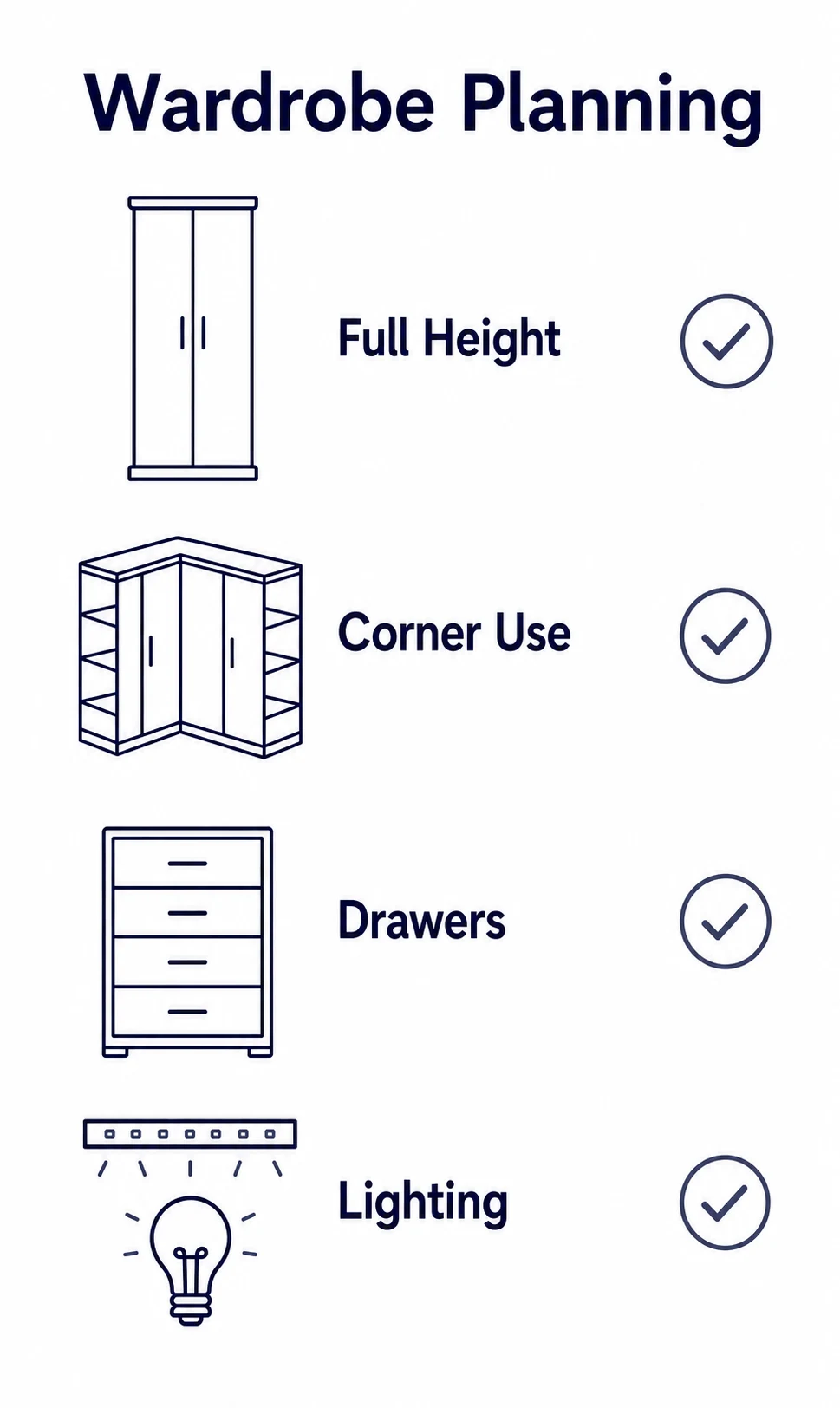
Good fitted wardrobes start with a realistic understanding of what needs to be stored. Before planning, it helps to separate daily items, occasional items and things that may not need to be kept in the bedroom at all. This prevents the wardrobe from being designed around clutter that should really be edited out.
It is also worth thinking about how the room is used at different times of day. Can doors open comfortably? Is there enough space to stand and choose clothes? Are bedside areas kept clear? Would internal drawers be easier than a separate chest? Small decisions like these have a big effect on how tidy the room feels in everyday life.
Awkward areas should not be ignored. Alcoves, sloping ceilings and narrow returns can often be turned into useful storage with the right design. Even shallow sections can be practical for folded items, accessories or smaller belongings. A standard furniture layout may avoid these areas, but a fitted approach can bring them into the storage plan.
If you are weighing up whether bespoke storage is the right route, this guide on whether bespoke furniture is worth the investment is useful background reading. For small bedrooms, the value often comes from making difficult space feel simple, usable and settled.
- Fitted wardrobes reduce clutter by giving belongings a planned, enclosed place to live.
- Built in wardrobes can use vertical and awkward space that freestanding furniture often wastes.
- Internal layouts matter as much as the outside design, especially in compact bedrooms.
- Combining hanging, drawers and shelves can reduce the need for extra furniture.
- Calm door designs and closed storage help small bedrooms feel more restful.
Frequently asked questions
Do fitted wardrobes make a small bedroom look smaller?
Not when they are designed in proportion to the room. Because fitted wardrobes can replace several separate pieces of furniture, they often make a small bedroom feel more organised and spacious.
Are built in wardrobes better than freestanding wardrobes for small rooms?
Built in wardrobes are usually better for using awkward gaps, full wall height and difficult corners. Freestanding wardrobes can work well, but they often leave unused space around them.
What should I include inside fitted bedroom wardrobes?
Start with your habits. Useful options often include hanging rails, internal drawers, shelving, shoe storage, higher cupboards for occasional items and smaller sections for accessories.
Can fitted wardrobes replace a chest of drawers?
Yes, in many bedrooms. Internal drawers can hold folded clothes and smaller items, which may reduce the need for extra furniture and help keep the room looking clearer.
Plan a calmer bedroom
If your bedroom feels cluttered because the storage is not working hard enough, Khristians can help you plan fitted wardrobes that suit the room, your belongings and your daily routine.